Millipedes
Ommatoiulus moreletii
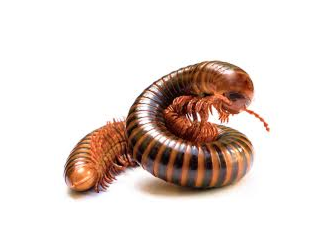
Millipedes range in sizes. The smallest millipede is around 0.2 mm (which is tiny), and the largest can reach 35 cm. Their bodies range from having just 11 segments to sporting over a hundred.
From all species of millipedes, all but one have hardened exoskeletons. The head of the millipede is rounded above and flat on the bottom. All species have mandibles. On their heads, they have a single antenna and a group of sensory organs. The function of these sensory organs is unknown, but they can be found in centipedes as well.
Their bodies differ from species to species being both cylindrical and flat. Only the head and the following segment are legless.
Each segment after the first two bears two pairs of legs rather than one as the centipede. Their legs have seven segments and are attached to the bottom side of their body. Often, males have longer legs than males. Common millipede species have anywhere from 30 to 400 legs. The Illacme plenipes is the creature with the most legs in the world, sporting 750 legs.
Signs of a millipede infestation
- Presence of Millipedes Indoors: Finding millipedes inside your home, especially in damp, dark areas like basements, bathrooms, or kitchens, is a clear sign of an infestation.
- Clusters of Millipedes: During warmer months, millipedes often seek shelter indoors, especially when the weather is wet. You might find clusters of them around window sills, doorways, and along the edges of walls.
- Appearance of Droppings: Millipedes produce small, cylindrical droppings that can be found near their hiding spots. These droppings can appear in places where you've noticed their movement.