Ants
Family Formicidae
Ants have one of the greatest evolutionary success stories in history - they represent more than 10% of theentire biomass on land! They have been around for more than 100 million years and they have outlived reptiles and mammals, alike.
Having gone through very subtle changes over such a long period of time and always working together for their common good, ants are a really impressive biological achievement.
Their numbers, resilience, and industriousness are what makes them such a formidable pest, too. Our very own species of Australian ants can be even more impressive. So let's delve in a bit deeper and see what makes these hard-working arthropods tick!
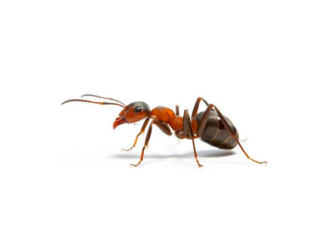
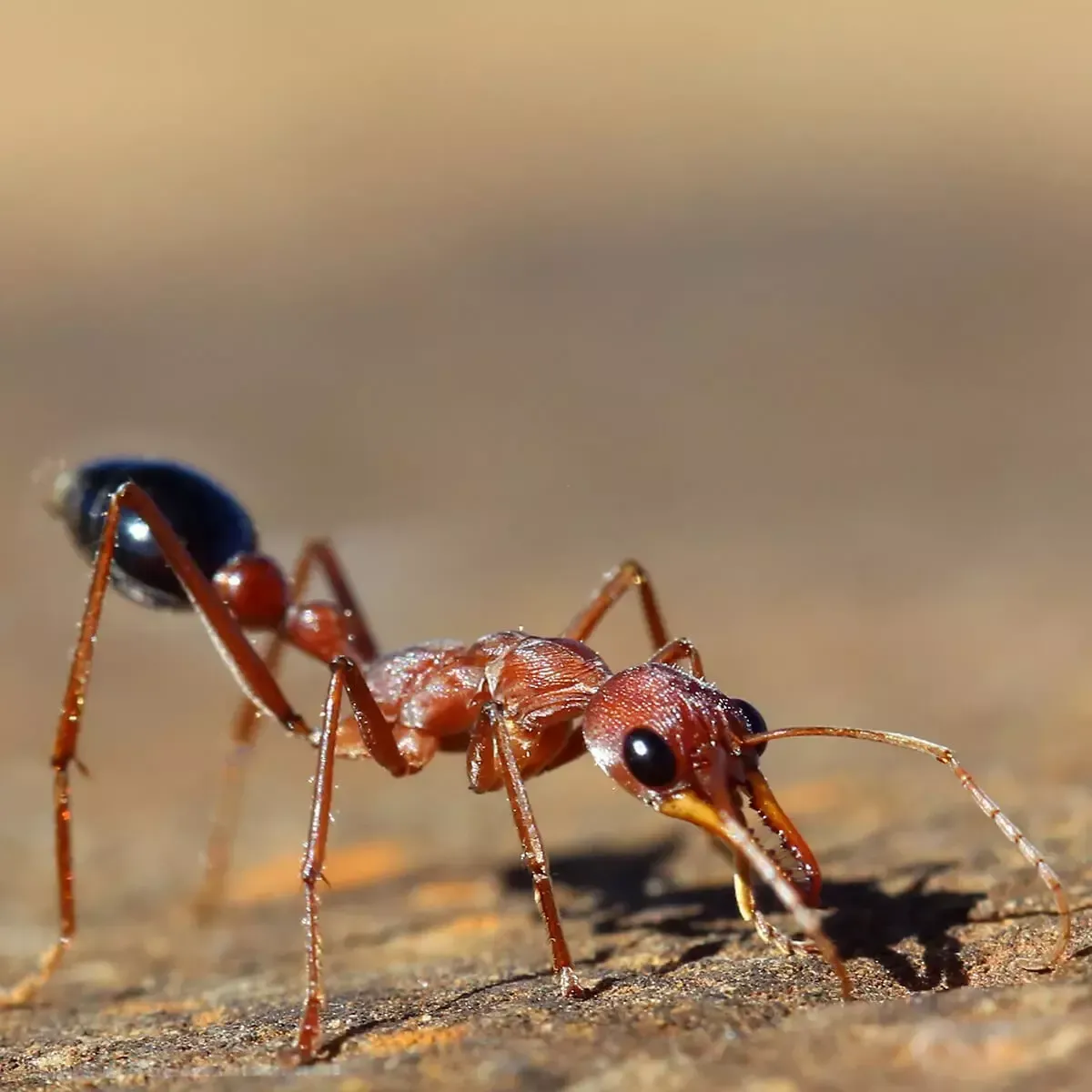
Bull Ant: Australian Bulldog Ants (Myrmecia Gulosa), also called Bull ants, are large, aggressive ants that can grow to 40mm. They're black with some red tones on their abdomen. They have strong and large mandibles with which they kill other insects and small animals.
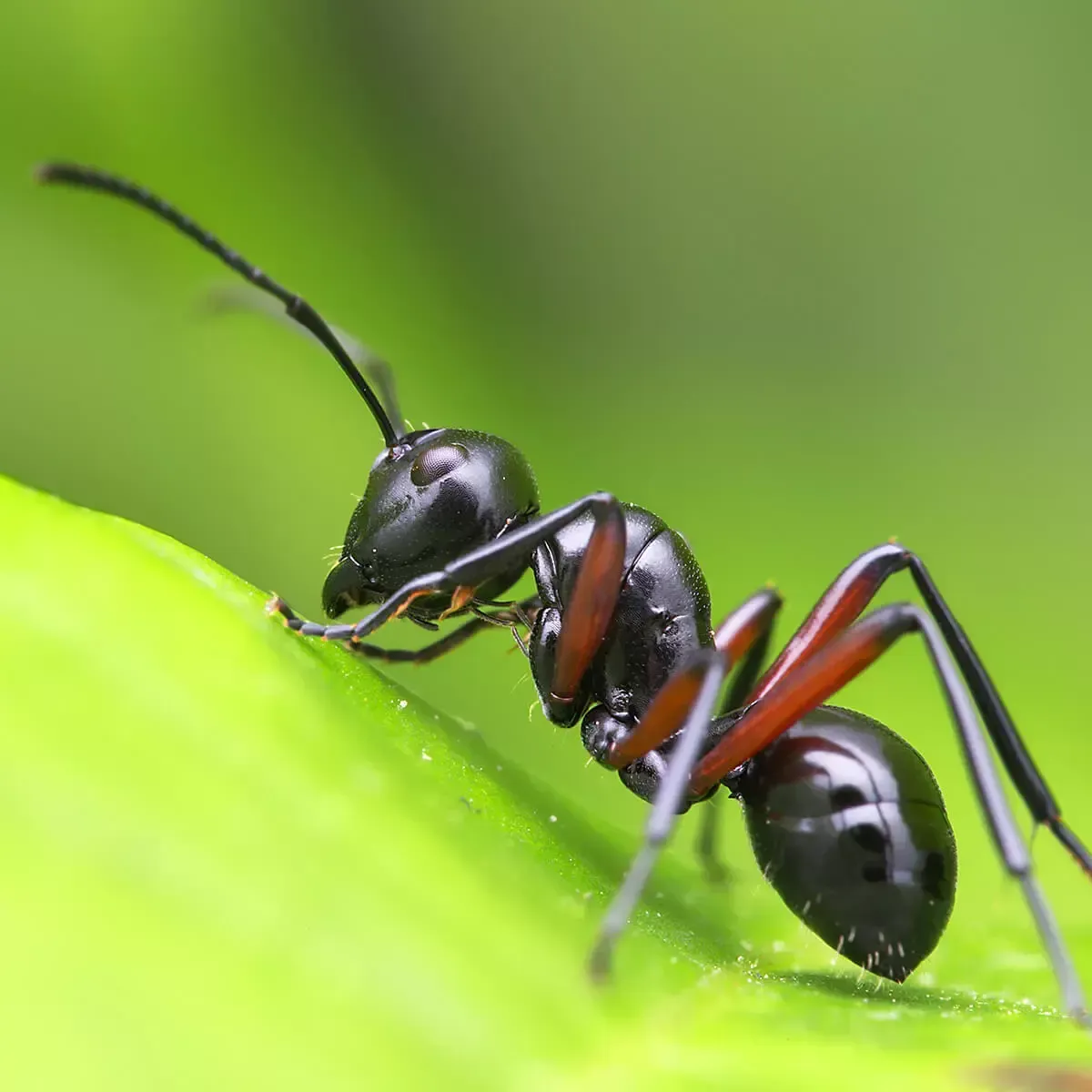
Black House Ant: The black house ant (Ochetellus glaber) is black in colour, with a glossy body that can reach 5mm. A colony of black ants can consist of up to 7000 ants. The older the colony, the bigger the ants are. Black ants can bite.
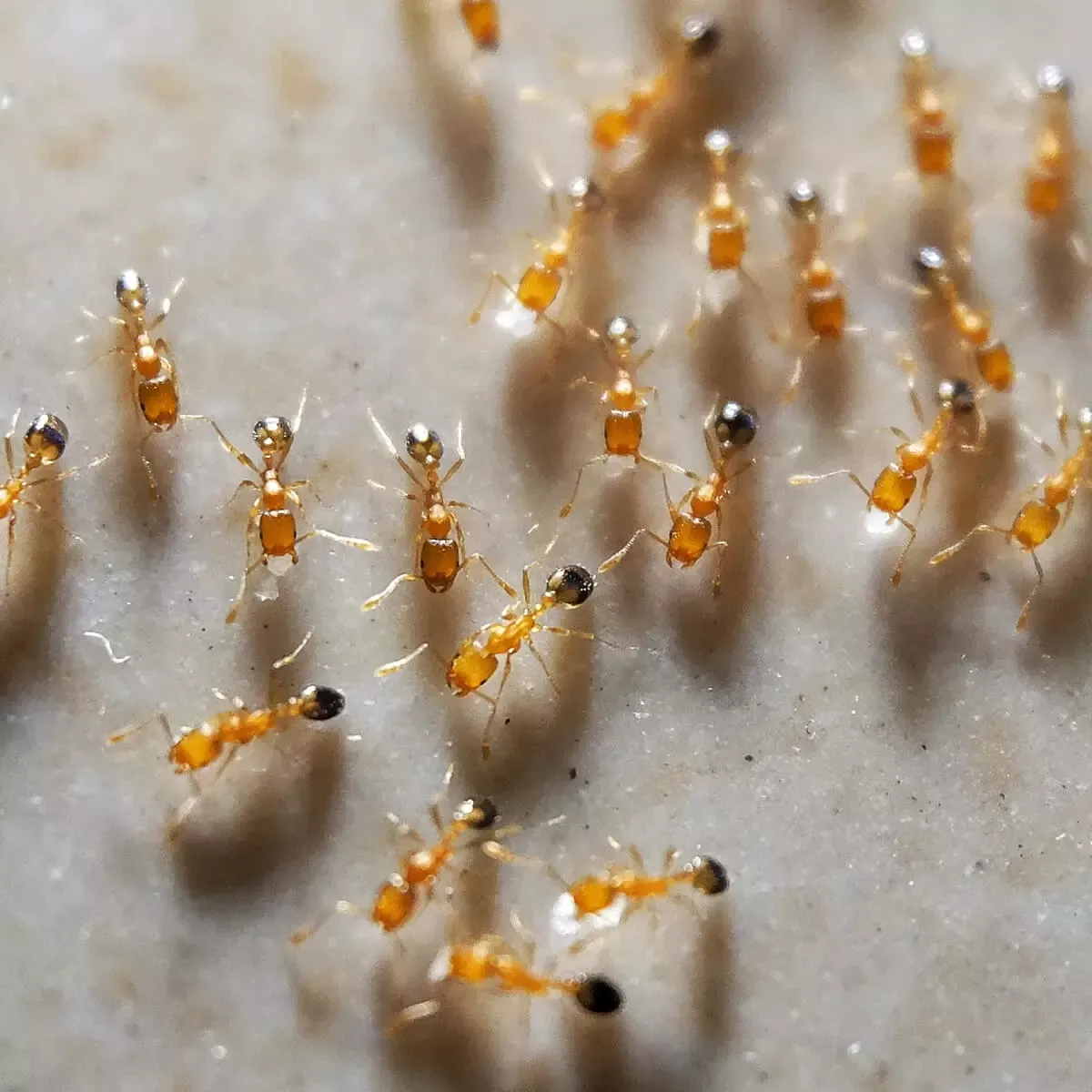
Pharaoh Ant: Pharaoh ant (Monomorium pharaonis) is a yellow, almost transparent ant. It can reach up to 2mm. Their colonies consist of many queens, which allows them to fragment into smaller colonies quickly when attacked. These ants can carry various diseases.
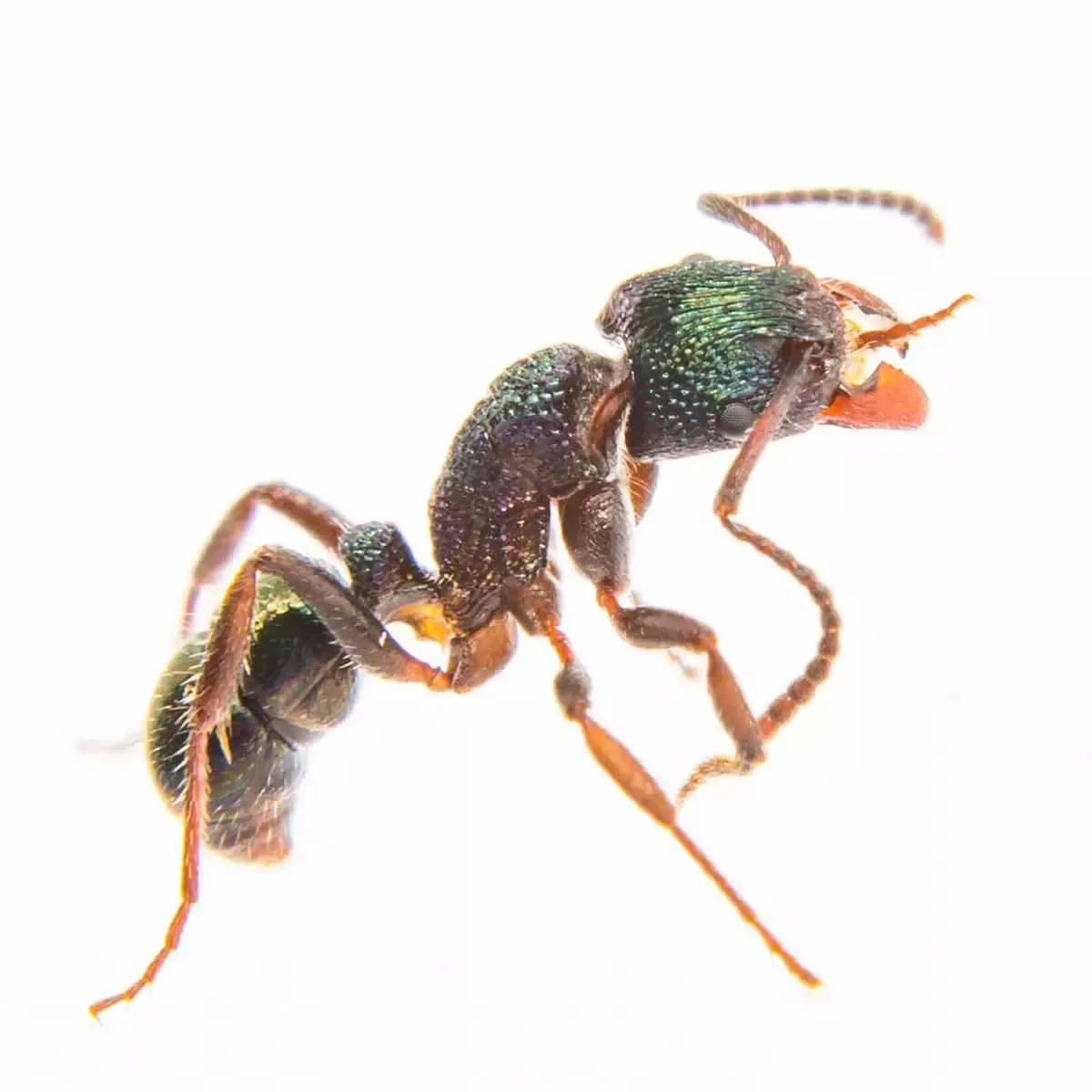
Green-head Ant: Green-head ants (Rhytidoponera metallica ) are a species of ant native to Australia. They have a distinct metalic look and get up to 5-7mm in size. All the females are fertile, which makes their colonies more resilient.
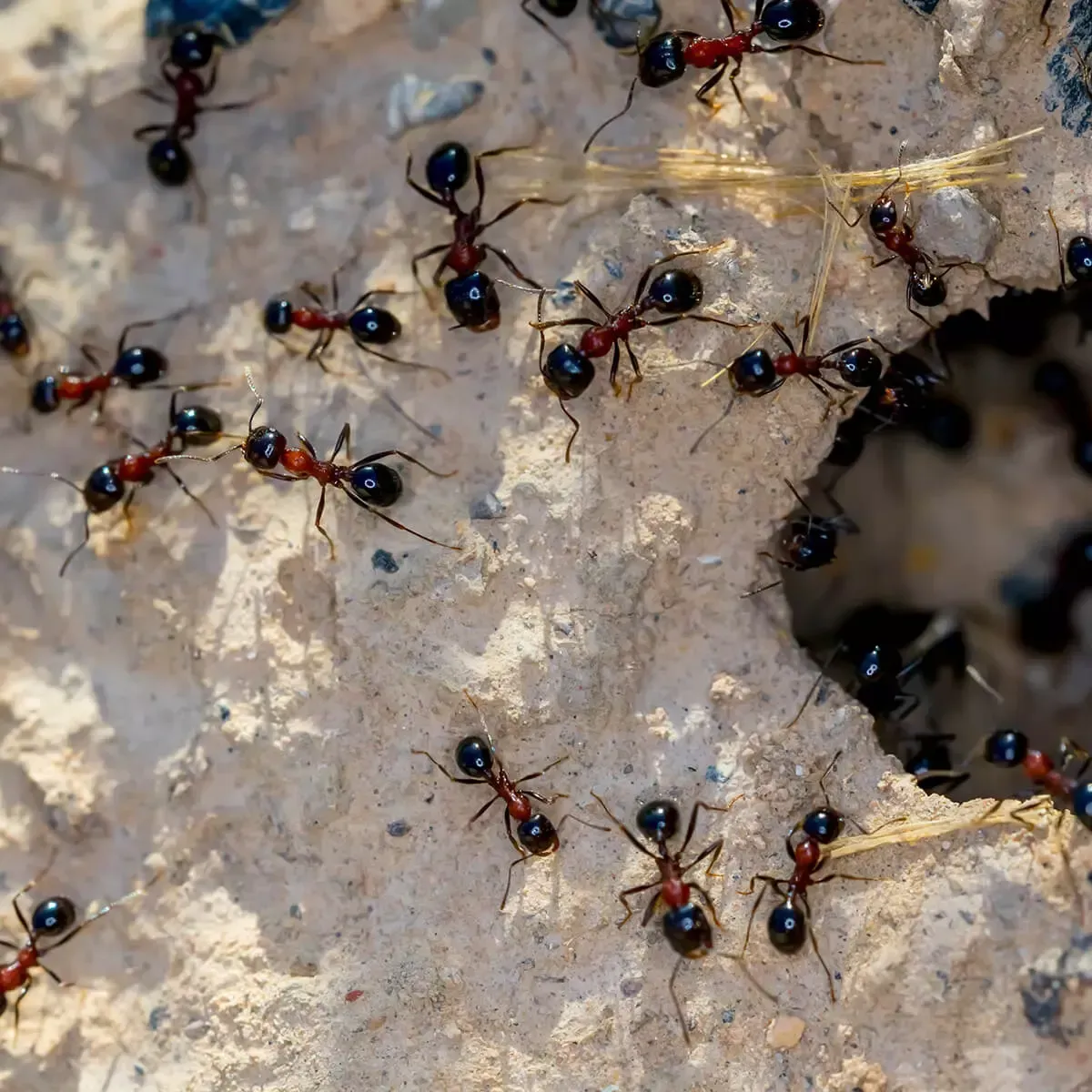
Meat Ant: Meat ant (Iridomyrmex purpureus) is a dominant native Australian ant species. They are mostly distributed along the East Coast and the inland wilderness. Meat ants are characterized by their red head, dark body, and mean attitude. At 6-12mm, they are mid-sized ants, but their sheer numbers make them impressive.
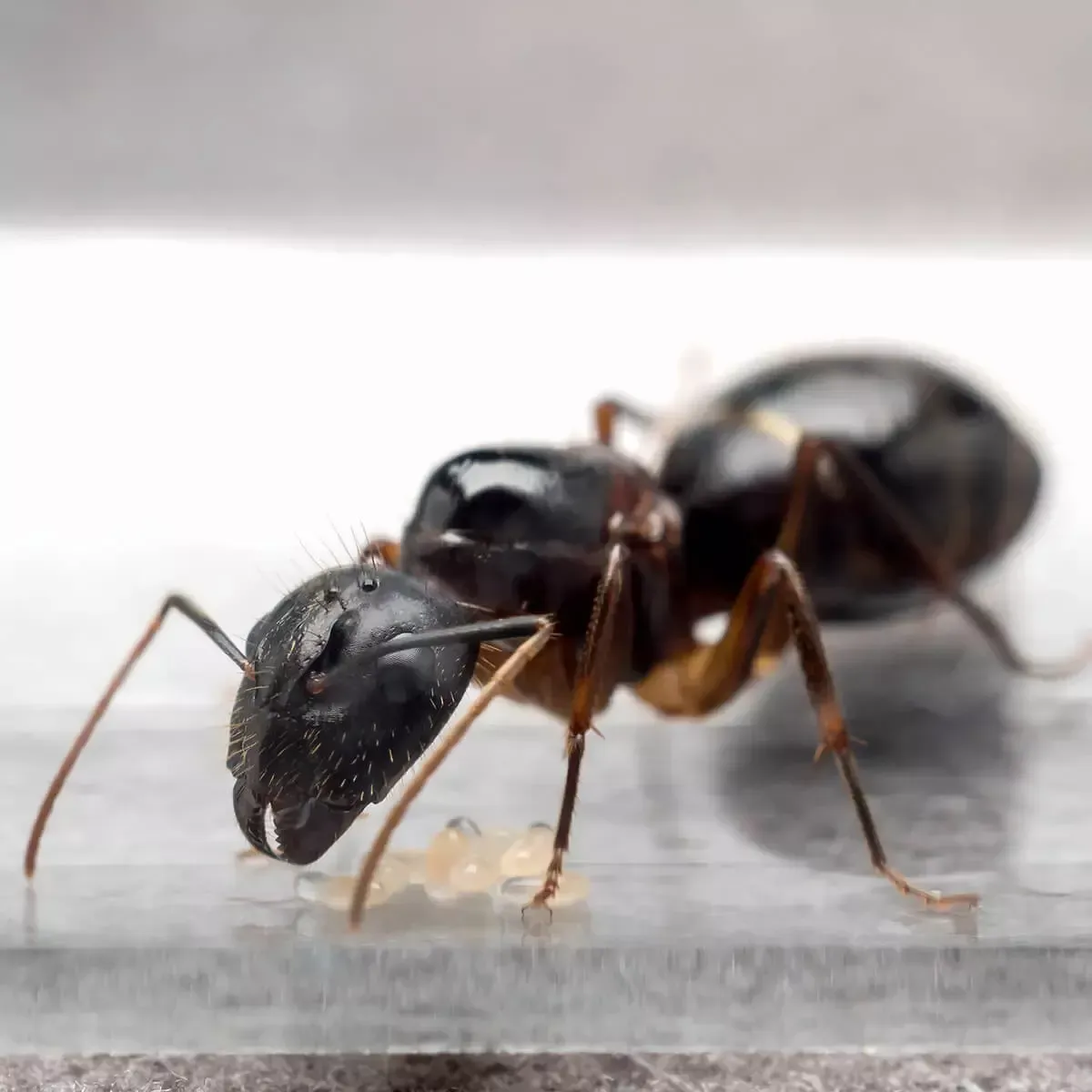
Carpenter ants: Carpenter ants (Componotus spp) are dark brown or black, spanning anywhere from 3 to 12 mm. It's a popular misconception that they have a huge appetite for wood, but that is incorrect. They create their colonies inside of wood, but throw the debris outside rather than eat it.
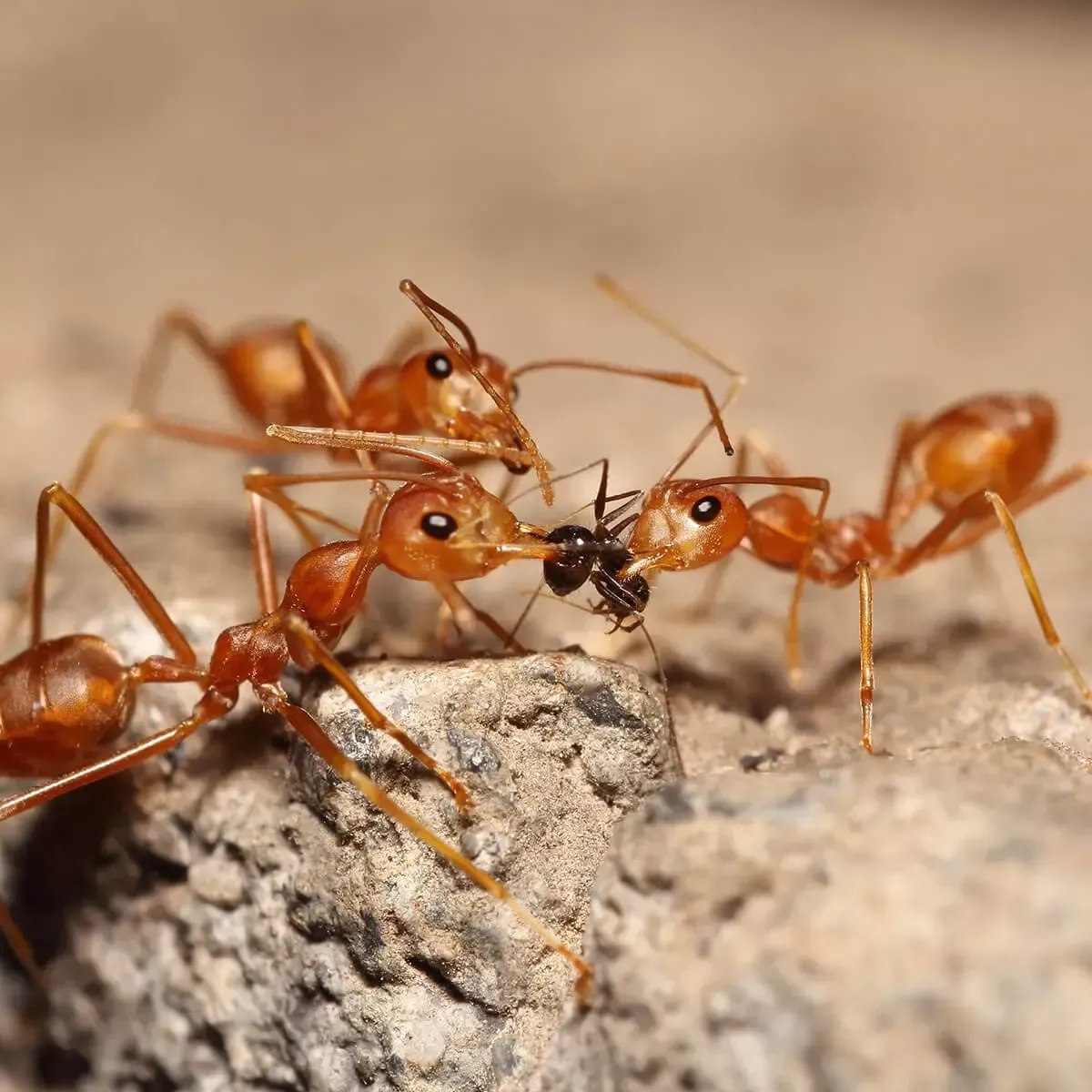
Red Fire Ant: The fire ant is also called red ant, and it's a collective name for the genus Solenopsis. They have brown heads and darker bodies and can grow to 6mm. They sting, and their venom is powerful. In some cases, you may need medical attention.
What attracts ants to the house?
If you have ants inside, they're looking for one of two things - food or water (possibly both). Let's round up the usual suspects:
- Sugary foods left out in the open is the number 1 perpetrator. Ants love this!
- Spilling a sugary drink and not cleaning it properly. See above!
- Food traces or crumbs. Bread is carbs, and carbs turn into sugar.
- Ants are more active in the summer due to collecting more food for the colder seasons.
- Leaky faucets can be a big one. This is why you may find ants in the bathroom, for example.
- Your house is just too hospitable - warm, damp. Some species like the carpenter ants build their nests in wood, so your house might provide a great ground for base of operations.
What can you do if you have an ant infestation?
- Keep all food sealed away in plastic containers.
- Look for the source of the infestation - if it's food or a leaky faucet, deal with this problem first.
- Thoroughly clean the floors - this will eliminate their chemical pathways.
- If the problem persists, you can always count on professional ant control.